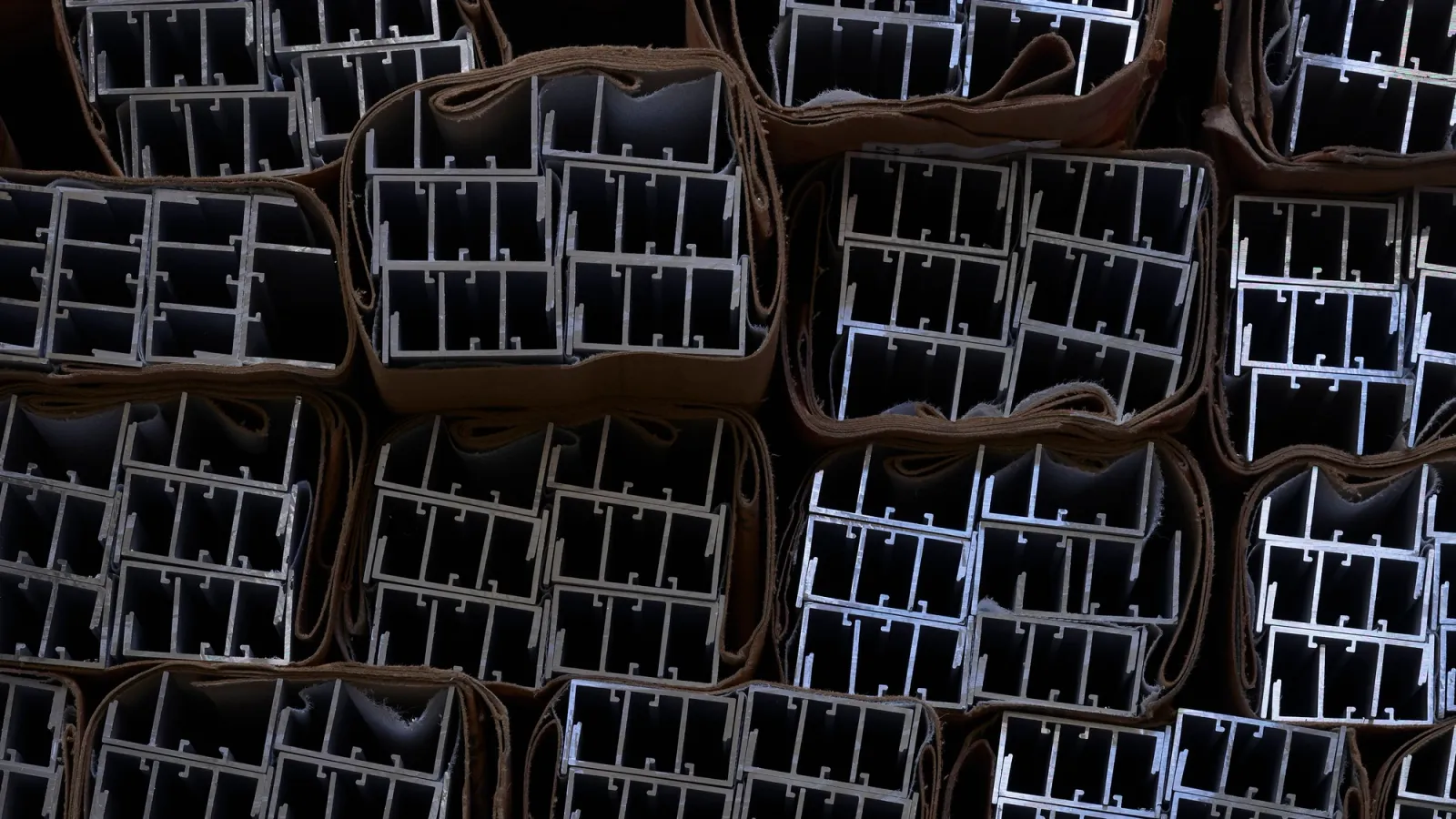
Using aluminum raw material produced with hydropower has reduced the climate impact of the material by two thirds.
Cut in Climate Footprint.
A 40% reduction since 2019.
Nybro, Sweden 25.02.27
Text: Sara Gripstrand, Sustainability Manager at LINTEX
Photos: Brendan Austin, Pia Ulin
At LINTEX, we aim to reach net zero climate impact across our entire value chain by 2040, ten years ahead of the Paris Agreement target. Between 2023 and 2024 alone, we reduced our climate impact by 30%, reaching a total reduction of 40% since 2019. We are well on our way to meeting our goal.
WHAT WE HAVE DONE
The reduction includes Scope 1 and 2 emissions, from our own operations and the energy we use, as well as key Scope 3 categories such as materials and transport, based on the Greenhouse Gas Protocol. This work supports our commitment to the Paris Agreement.
Our progress is the result of systematic efforts in three key areas:
1. Switching to low-carbon materials — The extruded aluminum, MDF, and particleboard we use are now produced using renewable energy.
2. Reducing our own waste — We have cut internal waste by half since 2019.
3. Using materials more efficiently — The steel tubes in our ONE series now contain 15% less material, without compromising functionality or stability.
Switching to low-carbon aluminum has reduced the climate impact of UNIT by 51%.
WHAT’S NEXT
Scope 3 emissions, which include all indirect emissions across our value chain — production of raw materials, transport, business travel, product use and end-of-life handling — account for 97 percent of our total climate footprint. Of that total, 85 percent comes from raw materials alone. To address this, we will continue to:
Encourage suppliers to shift to renewable energy and recycled materials.
Optimize material use to reduce waste.
Take back and remanufacture products to extend their lifespan.
Reaching net zero will not be easy, but we are fully committed to doing our part and encourage customers, suppliers and even competitors to do the same.